

Despite the fact that the Romans built raised pavements with stepping stones connecting them, so you could cross a road without disappearing under the mud, up until the end of the eighteenth century, only the poor walked around the towns and cities. The wealthy travelled on horseback and in carriages along the bumpy, rutted and often crottoir-ridden roads of towns and cities.
Then, suddenly, everything changed. ‘Overnight’, walking became fashionable for the well-to-do, who hopped off their carriages to amble around…for leisure!
The impact was enormous. The sudden popularity of walking the streets helped shape today’s urban landscapes, with footpaths, tree-lined boulevards, public parks and covered arcades, which sprang to life during the 19th century. The new penchant for strolling also saw shoes transforming from heavy high-heeled designs for indoors to softer, low-heeled items, which actually fitted your foot. In the first decades of the century, starting in Brussels, footpaths were lined with metal scrapers to wipe off the mud and excrement before going indoors. These were embedded into the pavements, presenting a ‘Grand National’ of trip hazards along every street. As more and more people adopted the habit of putting one foot in front of the other for fun, it became essential to clear a special space for this new ‘pedestrian class’, safe from flying filth, bolting horses and these dicey décrottoirs boot scrapers.
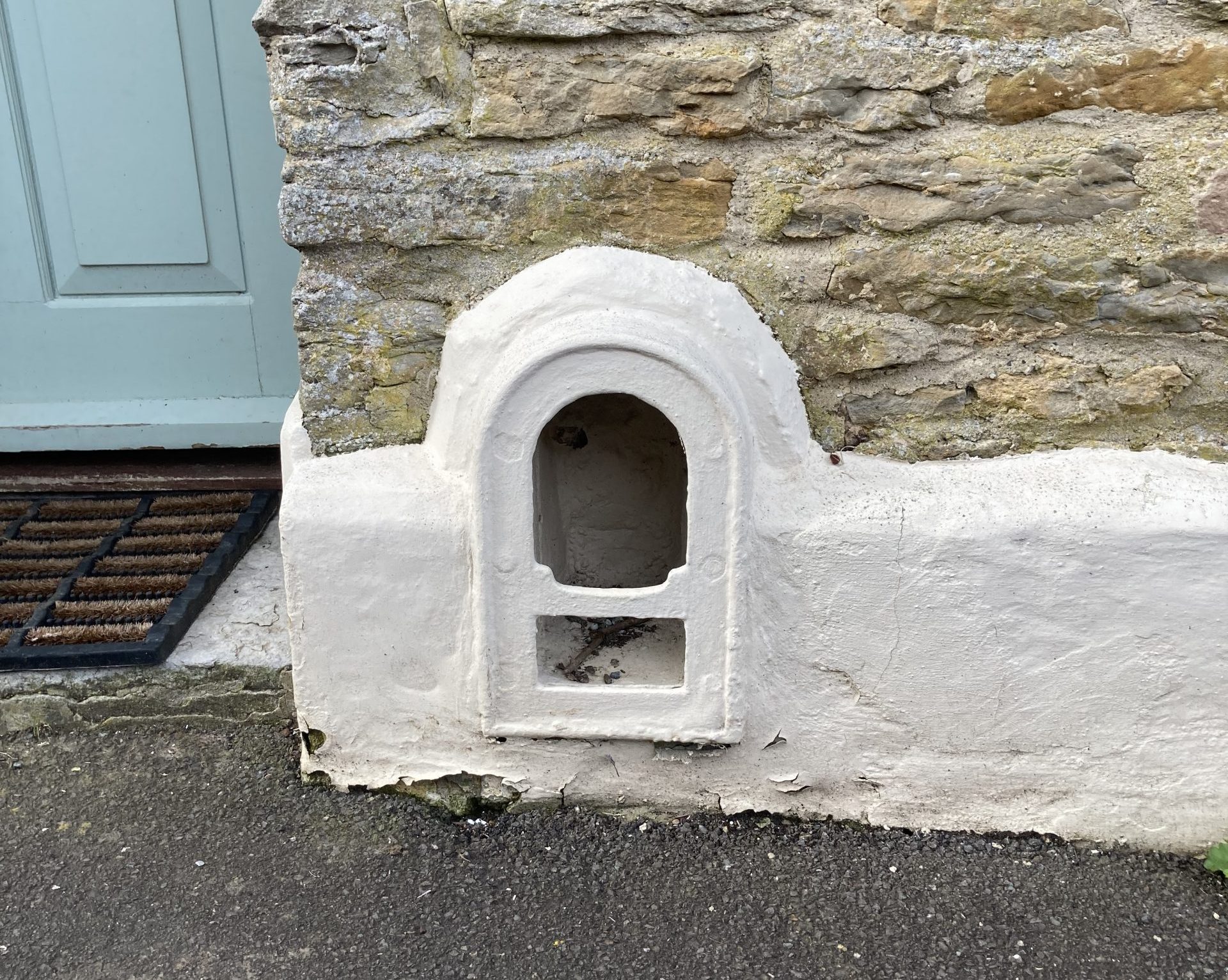
In the 1840s, scrapers were taken off the streets as authorities began to order the removal of pavement obstructions, in the interests of public safety. Instead, the ubiquitous “décrottoir” was now to be fixed to houses and public buildings, next to the front door. Boot scrapers came in three main forms: the free-standing type, secured into the top of a step next to a door; portable scrapers, some even sporting side brushes; and built-in arched boot scrapers integrated into the fabric of a building. The latter consisted of an inverted ‘U’ and a bar across the middle, acting as a blade, and shaped to take a shoe’s instep. This was known as the ‘Lethbridge’ design.
In Stalbridge, the heyday of the scraper was mid to late 19th century. Many houses and shops that could be entered directly from the street or pavement were provided with them. Manuals were published on how to enter a home and be civil by not taking off one’s shoes, and catalogues and posters on manufacturers of boot-scrapers started to appear.
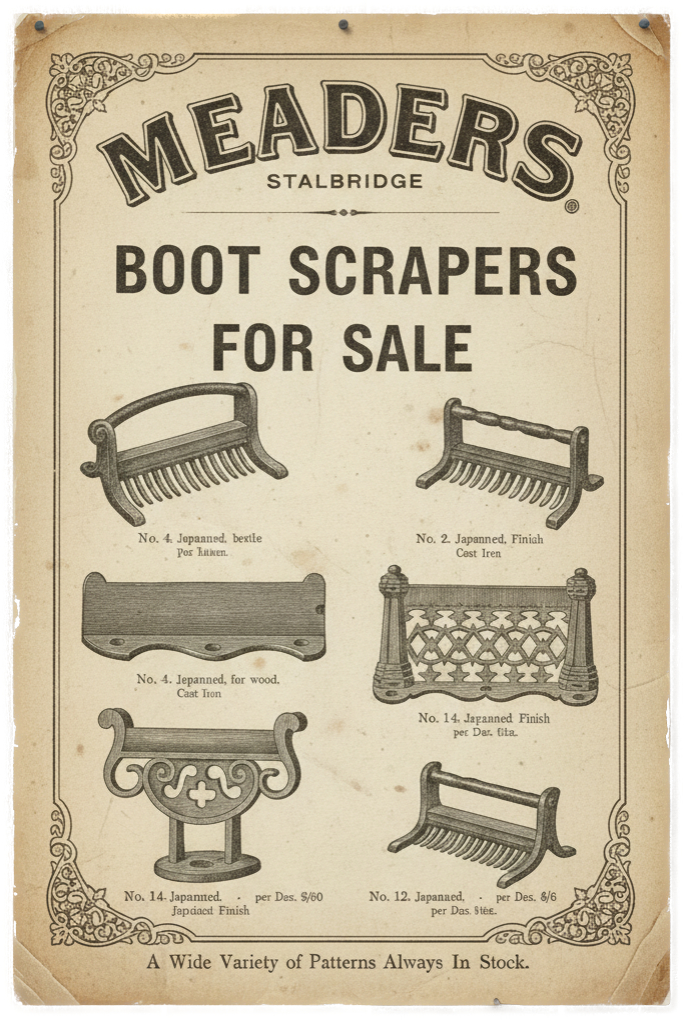
The French named them for their literal function, décrottoirs, the Spanish called them raspador, and in Holland they were known as schraper. In Stalbridge, there were numerous bootscrapers produced with designs which incorporated not only a horizontal scraper bar, but also vertical elements for scraping the sides and even curved angles for cleaning the heel of a boot or shoe.
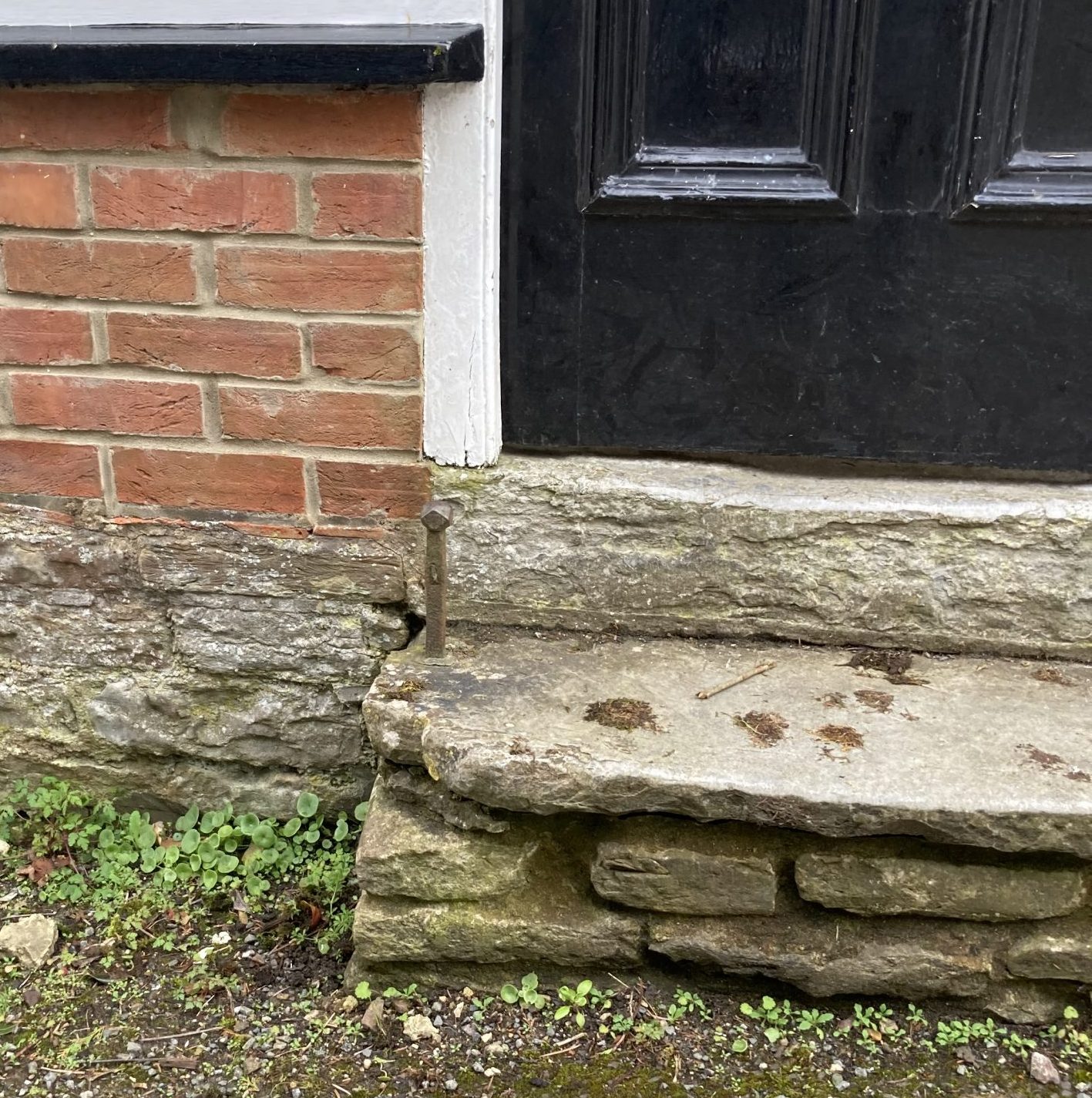
Where a stone step stood outside a property, the scraper was mounted on the side of the actual step, the remnants of which can be seen in the photo below, of a house at the top end of Gold Street.
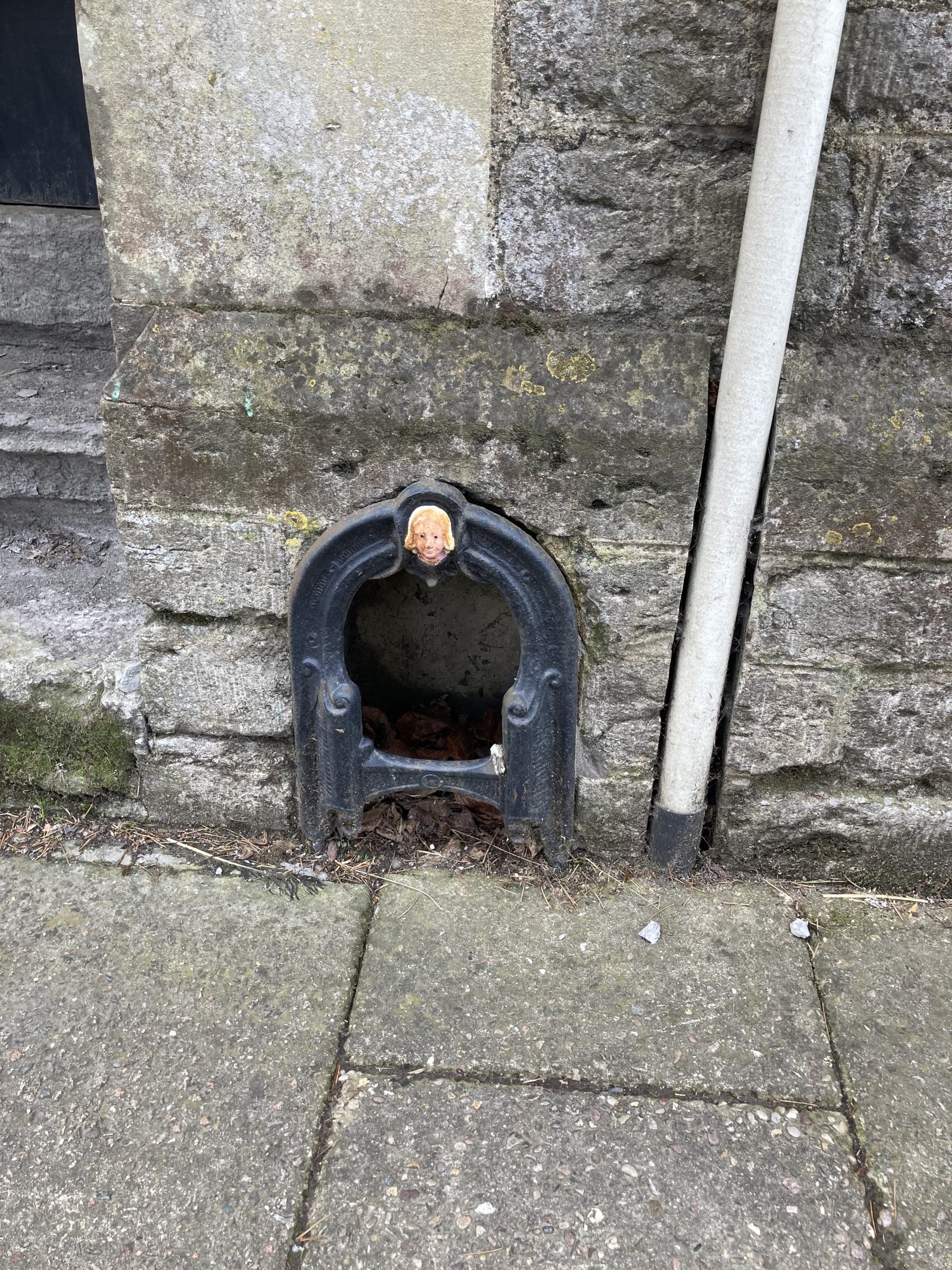
The most elaborate design among the 25 or so scrapers, still remaining in Stalbridge, features the face of a lady at the top of the arch and relatively intricate detailing on the surround. On one example of this, set into Devonshire buildings in the High Street, the lady has been lovingly painted by the owner at some point.
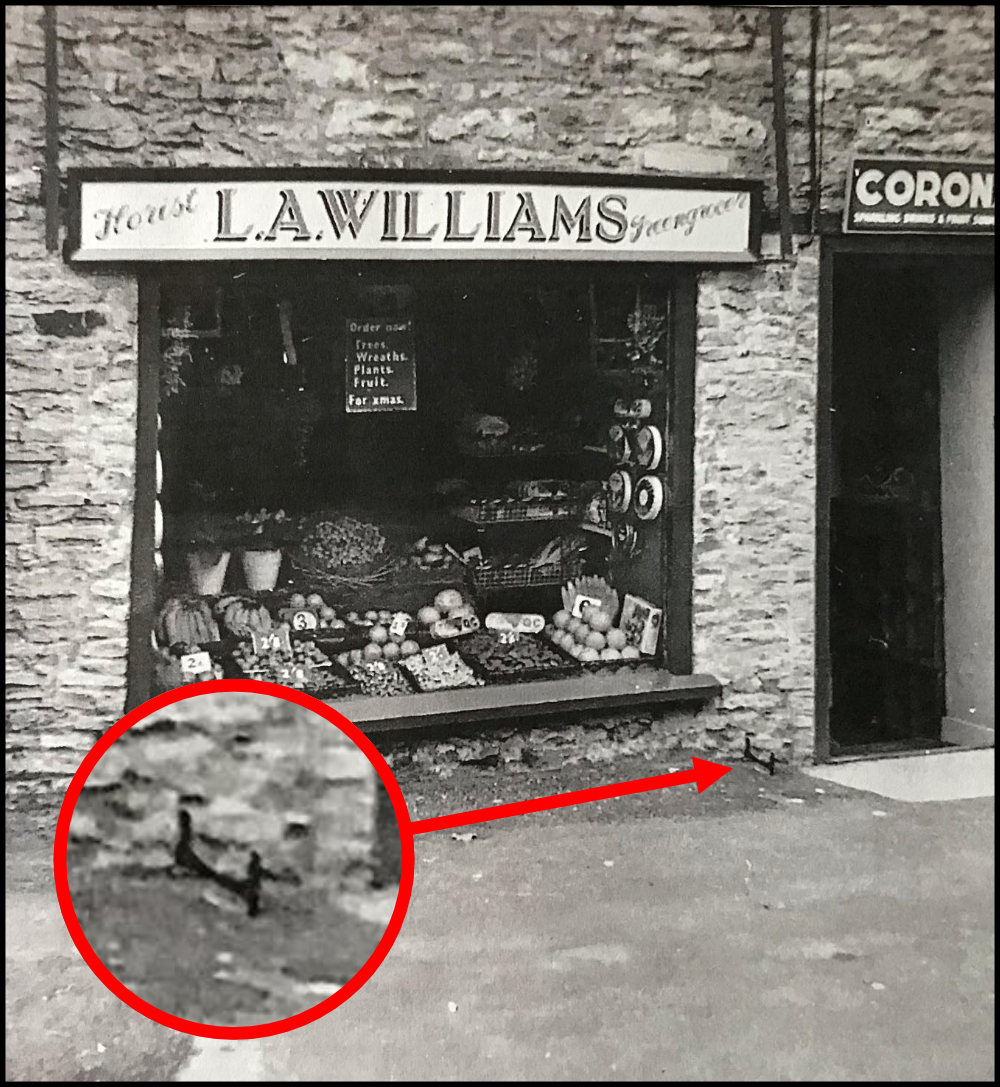
Most of the very basic scrapers that were set into the ground outside shops and houses of Stalbridge have been removed over time, including the one featured below, shown outside the Williams Florist of old…
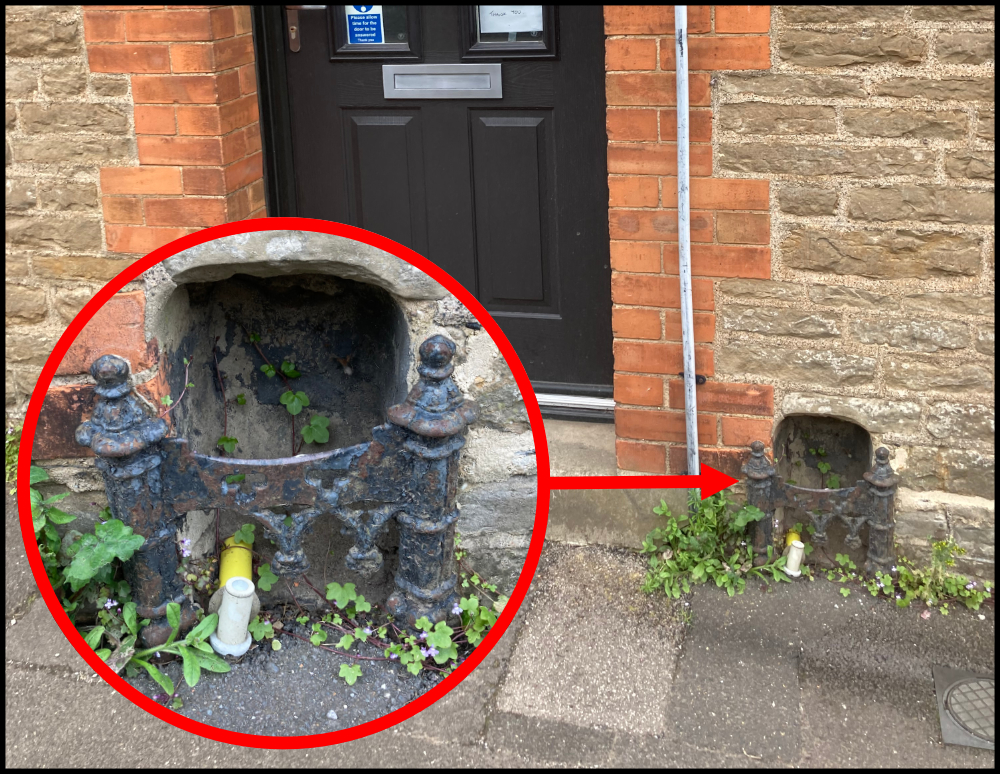
The most unique design in Stalbridge is probably the one shown below, which sits outside a house in Church Hill. It appears to be a hybrid of two types….an old hole in the wall, with a street-mounted scraper positioned in front of it.
As the state of the roads improved, with better drainage, the reduction in horse traffic, and the rise of the motor car the scraper became largely redundant. The decline of the decrottoir started at the turn of the twentieth century and the invention of Tarmac by Edgar Hooley, who whilst visiting Denby, in Derbyshire, in 1901, noticed a smooth stretch of road surface near to an ironworks. Being a curious person he enquired as to what had happened to produce this, and was informed that a barrel of tar had fallen from a dray and split open, spewing the tar everywhere. Someone then poured waste slag from the nearby furnaces over it to cover up the mess, but Hooley realised that this temporary fix had solidified the road surface…no ruts, no dust and no mud!
In 1902, Hooley set about patenting the idea of heating tar, adding slag and broken stones to form a mixture, creating a smooth, but sturdy surface. By 1903 he had established the Tar Macadam Syndicate Ltd and registered Tarmac as a trademark. Sir Alfred Hickman, a Wolverhampton MP, who also just happened to own a steel factory, which produced a huge quantity of slag, became involved, later forming the ‘Tarmac’ company which still exists to this day.
Boot scrapers were then in decline- no longer incorporated into new buildings, and, particularly during both world wars, they were removed and smelted down for the war effort, along with street railings…
These days, most surviving scrapers are sold for high prices at reclamation businesses, and reproductions can be found outside the tack rooms of country houses.
How nice, therefore, that so many are still to be found in Stalbridge. Next time you are out for a stroll, why not have a look out for them…and how many of them feature ‘Lady de Crottoir’?